

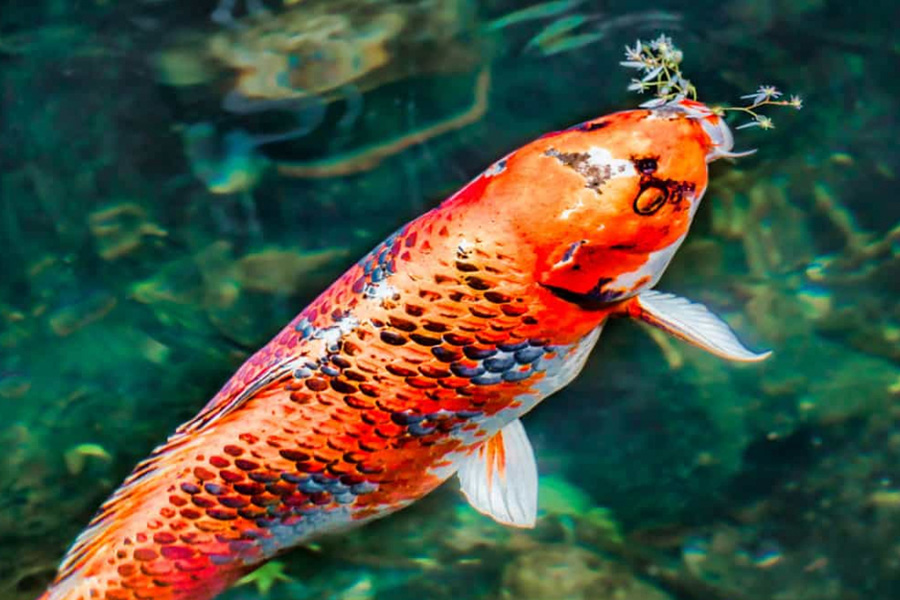
The story behind Japanese koi fish is far richer than many enthusiasts realize. Even devoted koi keepers are often unaware of the deep cultural and historical roots these ornamental fish possess. Understanding the origins and development of Japanese koi fish not only adds meaning to their beauty but also reveals the remarkable journey that transformed a simple carp into one of the most admired fish in the world.
China: The True Origin of Koi Fish
Koi fish trace their roots back to common carp, which naturally developed unusual color mutations such as white, red, and blue in regions surrounding the Black, Caspian, and Aral seas in Asia. These early variations appeared in ancient waters and were first recognized and appreciated in China, making it the true starting point of koi history.
Historical records show that these uniquely colored carp captured attention early on and were even associated with cultural symbolism and artistic expression. When these carp were later introduced to Japan, they were initially valued not for their beauty but for their practicality. Due to their hardiness and ability to survive in challenging conditions, they were bred as a reliable food source. This marked the beginning of their transition into what would eventually become Japanese koi fish.
Bred for Beauty and Perfection
Once these carp reached Japan, their potential for ornamental value was gradually recognized. Unlike earlier uses, attention shifted toward enhancing their natural color variations through selective breeding. What began as a practical resource slowly evolved into an artistic pursuit.
Rice farmers, who had originally raised these fish for food, began to notice the striking patterns and colors that occasionally appeared. Between the 1820s and 1830s, they started intentionally breeding carp to emphasize these visual traits. Over time, this careful selection resulted in more vibrant and refined patterns. It is this dedication to aesthetic improvement that ultimately led to the recognition of these fish as Japanese koi, setting them apart from their ancestors.
The Rise in Popularity
As their beauty became more refined, Japanese koi fish quickly gained popularity within the country. Their vibrant colors and graceful movement made them highly desirable, and they soon became a symbol of elegance and status. While the rest of the world had yet to fully discover them, their reputation within Japan continued to grow.
Their prominence reached a new level when they were presented as a prestigious and meaningful gift for an imperial setting in the early twentieth century. This moment brought widespread attention to these ornamental fish and sparked global curiosity. From that point forward, Japanese koi fish began to capture the admiration of people far beyond their place of origin, eventually becoming beloved worldwide.
Continued Breeding and Global Expansion
As interest in koi spread internationally, breeders around the world began to explore new possibilities. This led to extensive breeding efforts and the development of a wide variety of koi types. Today, there are over one hundred recognized varieties, each with distinct color patterns, scale types, and characteristics.
These varieties are organized into multiple general classes, reflecting the diversity achieved through decades of selective breeding. Despite the wide range of appearances, all koi can still be traced back to their carp origins. New variations continue to emerge, showing that the evolution of koi fish is far from complete.
The history of Japanese koi fish is an ongoing story of adaptation, creativity, and appreciation. Their enduring appeal lies not only in their beauty but also in their resilience and ability to thrive. No matter how trends may change, these remarkable fish have proven that they will continue to hold a special place in the hearts of people around the world.