
A few years ago, hardly anybody around York asked about composite fencing. Timber still dominated most jobs. Concrete posts with closeboard panels. Feather edge runs. The usual stuff that has worked for decades.
Now it is one of the first things people mention.
Sometimes before I have even measured the garden.
That shift has happened fast. Social media has played a part. So have newer housing estates where people want cleaner-looking gardens with less upkeep. There is also the simple fact that many homeowners are tired of painting, staining and repairing timber fencing every few years.
Still, from years on site, I can say this honestly: composite fencing is not automatically the right answer for every garden. I have fitted some systems that looked excellent. I have also seen installations that felt overpriced, flimsy or badly thought through.
A lot depends on the product, the installation and the garden itself.
If you search for composite fencing services in York, you will find plenty of glossy photos and sales talk. What you do not always get is honest advice from somebody who has worked through wet clay ground in January trying to correct a poor installation done six months earlier.
That is the bit worth understanding before spending the money.
Why composite fencing suddenly became popular
The biggest driver is maintenance. Or rather, people wanting less of it.
Traditional timber fencing still works well. I install plenty of it. But homeowners are busier now and many simply do not want the yearly routine of treating panels, replacing warped boards or dealing with rot near the base.
Composite promises a simpler option:
- No staining
- No painting
- No rot in the traditional sense
- Cleaner modern appearance
- Longer expected lifespan
- More colour consistency
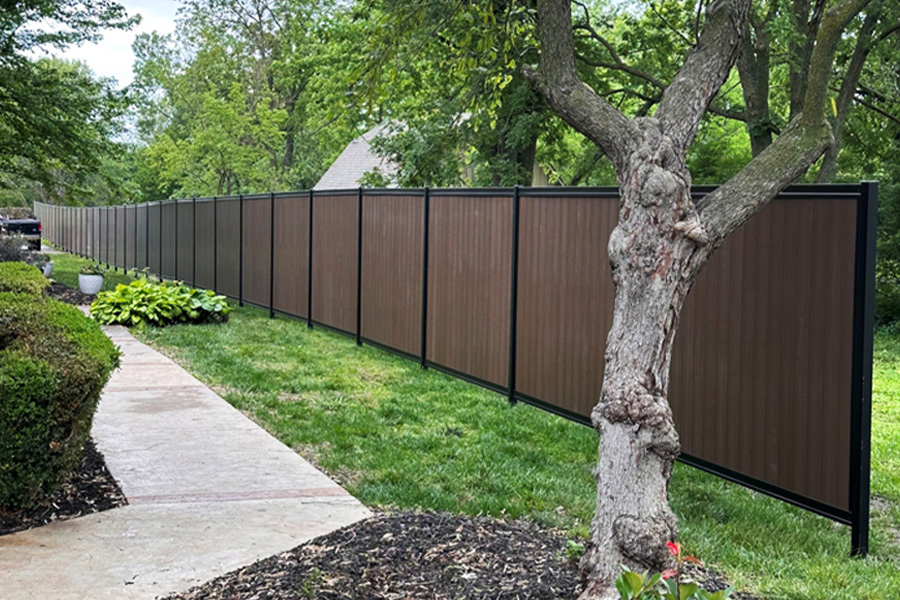
For newer homes around York, especially areas with modern landscaping and garden offices, the look appeals to people. Grey composite panels paired with black posts have become especially common.
Many homeowners in York ask me if composite fencing is “maintenance free”.
That phrase needs binning, honestly.
Nothing outside is maintenance free.
Composite still gets dirty. Algae still grows. Panels still expand and contract slightly. Cheap systems still fade. Poor installations still move if the groundwork is bad.
The difference is that maintenance is usually lighter compared to timber.
The real issue is not the panel – it is the installation
One thing I see often on local jobs is people focusing entirely on the boards themselves while ignoring what actually holds the fence upright.
Posts matter more.
Ground preparation matters more.
Drainage matters more.
A weak installation with expensive composite panels is still a weak fence.
York soil can be unforgiving in places. Around Fulford, Huntington and parts of Rawcliffe especially, heavy damp clay causes movement through winter. If posts are shallow or concrete is poor, fences start shifting surprisingly quickly.
I still see fencing contractors setting posts too shallow because composite systems are marketed as “lightweight”. That logic falls apart once wind hits a long uninterrupted run.
Composite panels can act like sails in exposed gardens.
I prefer solid post depth regardless of material. Usually around 600mm minimum for standard domestic work, deeper where exposure or ground conditions demand it.
Anyone searching fencing contractors near me should ask exactly how composite posts or supports are being installed. Not just what the panels look like.
Cheap composite fencing can look tired very quickly
This is where opinions get blunt.
Not all composite systems are equal. Some are excellent. Some are absolute rubbish dressed up with marketing.
The cheaper systems often suffer from:
- Uneven colouring
- Noticeable fading
- Thin boards flexing
- Poor expansion allowance
- Surface scratching
- Weak fixings
- Plastic-looking finishes
I have seen bargain systems installed in spring that already looked faded and patchy by the following summer.
Better systems cost more because the manufacturing is better. The finish is better. The structural rigidity is better.
That is why fencing composite fencing cost varies so much. People compare one quote against another without realising the actual product may be completely different quality underneath.
Sometimes the cheapest quote genuinely is cheap for a reason.
Composite fencing works best in certain gardens
There are some jobs where composite makes perfect sense.
Modern landscaped gardens.
Low-maintenance rental properties.
Homes with decking and contemporary patios.
Gardens with heavy shade where timber stays damp.
People physically unable or unwilling to maintain timber.
Properties where colour consistency matters.
It can also suit smaller urban gardens where clean lines matter more visually.
But I would not automatically push composite into every setting. Period cottages, older terraces and rural properties often suit timber fencing better aesthetically. A weathered feather edge fence can sit naturally into an older garden in a way some composite systems cannot.
This is where experience matters more than trends.
Good fencing contractors should recommend what suits the property, not simply what makes the biggest invoice.
Weather movement catches some homeowners out
Composite still reacts to temperature.
Not as dramatically as untreated timber, but it moves.
During hot spells, boards expand slightly. During colder weather, they contract. Good systems account for this with spacing tolerances and hidden fixing methods.
Bad installations ignore it completely.
I have seen panels bow because expansion gaps were too tight. I have seen systems rattle because fixings were rushed. I have seen posts shift because installers treated composite like decorative cladding instead of fencing exposed to Yorkshire weather.
Heatwaves followed by sudden storms have become more common over recent years. That cycle is rough on fencing generally.
Composite handles moisture differently from timber, but sudden temperature swings still affect long-term stability if installation is poor.
The hidden costs people forget about
When people search fence installation near me, they often compare headline prices only.
That rarely tells the full story.
Composite fencing costs usually include more than just the visible boards:
- Posts
- Rails
- Gravel boards
- Fixings
- Groundwork
- Waste removal
- Concrete
- Labour
- Access complications
- Old fence disposal
- Gate matching
- Delivery costs
- Stepped garden adjustments
A simple straight run on clear ground is straightforward. A narrow York terrace garden with awkward access, old concrete hidden underground and raised beds everywhere becomes a different job entirely.
I had one job recently where the actual fencing took less time than removing decades of buried concrete and collapsed timber posts.
That side of fencing never appears in brochures.
Composite fencing and privacy trends
Privacy has become a bigger topic recently.
More people work from home now. Gardens are being used differently. Garden offices, outdoor seating areas and hot tubs have all increased demand for taller fencing and better screening.
Composite suits that trend because it tends to create cleaner uninterrupted runs.
Timber can warp or shrink slightly over time, creating gaps. Composite usually holds a more consistent line visually.
That said, taller solid fencing also catches more wind.
This is where proper post spacing and structural support matter massively. I still see installations where the visual design has clearly been prioritised over actual strength.
Looks good for the photos.
Not so good after a February gale.
Repairs can be more awkward than people expect
This is something suppliers rarely mention.
Composite fencing repairs are sometimes less straightforward than timber repairs.
With timber fencing, replacing one damaged board or rail is usually simple enough.
Composite systems are often more integrated. Colours can change between manufacturing batches too. If a panel gets damaged years later, matching it perfectly is not always guaranteed.
Some systems become discontinued surprisingly quickly as trends shift.
That is worth considering before choosing unusual finishes or obscure manufacturers.
One advantage of traditional timber fencing is that repairs remain relatively easy long term. Any decent fencing contractor can source or adapt replacement materials.
Composite can occasionally lock you into a specific system.
Drainage still matters – probably more than people think
One thing I constantly repeat on site is this: water causes most fencing problems eventually.
Even with composite systems.
The boards themselves may resist moisture better, but the surrounding structure still matters. Posts still sit in ground. Concrete still moves. Water still pools.
I see plenty of gardens where homeowners unknowingly trap moisture around fencing with raised flower beds, bark, decorative stones or artificial grass edging.
Poor drainage shortens lifespan across almost every fencing type.
York gardens with heavy clay especially need proper thought around water runoff. If ground remains saturated for long periods, movement becomes more likely regardless of material.
A smart installation always thinks about drainage before the first post goes in.
Composite is not indestructible
This needs saying clearly because some marketing gets ridiculous.
Composite fencing is tough, but not invincible.
Sharp impacts can damage boards. Cheap systems scratch. Pressure washing too aggressively can mark surfaces. Strong wind still tests weak installations.
And yes, I have seen composite panels crack.
Usually from impact damage or poor support rather than weather alone, but it happens.
There is also the reality that some homeowners simply expect too much. Any fence exposed to British weather year after year will age somehow.
The goal is slower deterioration and lower maintenance, not immortality.
Timber still has advantages
Despite the rise in composite fencing, timber is nowhere near disappearing.
Honestly, well-installed timber fencing still offers:
- Lower upfront cost
- Simpler repairs
- Natural appearance
- Greater flexibility in design
- Easier customisation
- Better suitability for older properties
- Easier colour changes
- Less visible scratching
Pressure-treated closeboard fencing remains popular because it works. Especially when installed properly.
A lot of homeowners searching fencers near me still end up choosing timber after weighing the actual costs properly.
Sometimes the better choice is not the trendier one.
Composite fencing works brilliantly with modern landscaping
Where composite really shines is alongside contemporary landscaping.
- Decking.
- Porcelain patios.
- Rendered garden walls.
- Outdoor kitchens.
- Modern aluminium pergolas.
- Slatted screening.
- Minimalist planting.
In those settings, composite can look excellent because the materials visually connect together.
Traditional timber fencing can occasionally look rough beside ultra-modern landscaping unless carefully designed.
This is why more fencing services now include combined landscaping and fencing packages. People want the whole garden to feel cohesive rather than pieced together over several years.
Gates are often overlooked in composite projects
Matching gates matter more than people realise.
A modern composite fence with a sagging timber gate beside it looks wrong instantly.
But gate construction becomes important because composite gates can become heavy depending on the system used.
Heavy gates need stronger hinges.
Stronger posts.
Better support.
Correct clearance.
I still overbuild gate posts whenever possible because gates create constant movement stress.
Most callbacks on fencing jobs involve gates rather than panels.
That has been true for decades regardless of material.
Local wind exposure changes everything
York itself varies more than people think.
Sheltered urban gardens behave differently from open village edges around places like Wheldrake or Stockton-on-the-Forest.
Long open runs facing prevailing wind need stronger support.
Sometimes I recommend breaking up large solid sections slightly rather than creating one uninterrupted wall catching every gust.
That advice applies to timber and composite alike.
The strongest-looking fence is not always the strongest design structurally.
The “maintenance free” myth creates unrealistic expectations
This is probably my biggest frustration with modern fencing advertising.
People hear “maintenance free” and mentally translate it as “never needs attention”.
Then they get annoyed when algae appears in shaded areas or dirt builds up after winter.
Composite fencing still benefits from occasional cleaning. Especially around York where damp conditions encourage surface growth.
The difference is that maintenance is lighter and less frequent compared to timber treatment cycles.
That is a fair selling point.
Pretending it never needs care at all is not.
Composite fencing is likely here to stay
I do not see composite disappearing anytime soon.
The demand is real. The products are improving. Better systems genuinely perform well. Homeowners clearly value lower maintenance and modern appearance.
But I also think the market is still maturing.
Some manufacturers will disappear.
Some products will age badly.
Some systems being heavily promoted now probably will not look clever in ten years.
That always happens when trends move quickly.
The best approach is not chasing fashion. It is choosing a fencing solution that suits the property, the exposure, the budget and how much maintenance you realistically want to do.
That sounds obvious, but plenty of people skip that thinking entirely.
What I would personally look for before buying composite fencing
If I were paying for it myself, I would check:
- How rigid the boards feel
- How posts are installed
- Expansion allowances
- Colour consistency
- Warranty details
- Whether replacement panels will remain available
- Fixing quality
- UV resistance
- Wind suitability
- Actual thickness of materials
- What happens around gates and corners
And most importantly, I would pay attention to the contractor rather than just the brochure.
Good installation hides a lot of sins.
Bad installation ruins even expensive systems.
That is true whether you are searching for fencing contractor near me, fencing companies near me or simply comparing fencing services locally around York.
Because once the weather turns rough again, marketing disappears and the fence has to do its job properly.